We secured Italy’s golden visas – now we live in a 300-year-old country farmhouse
A British couple who became burnt out working as teachers during the pandemic have since moved to a farmhouse in the Italian countryside after securing golden visas.
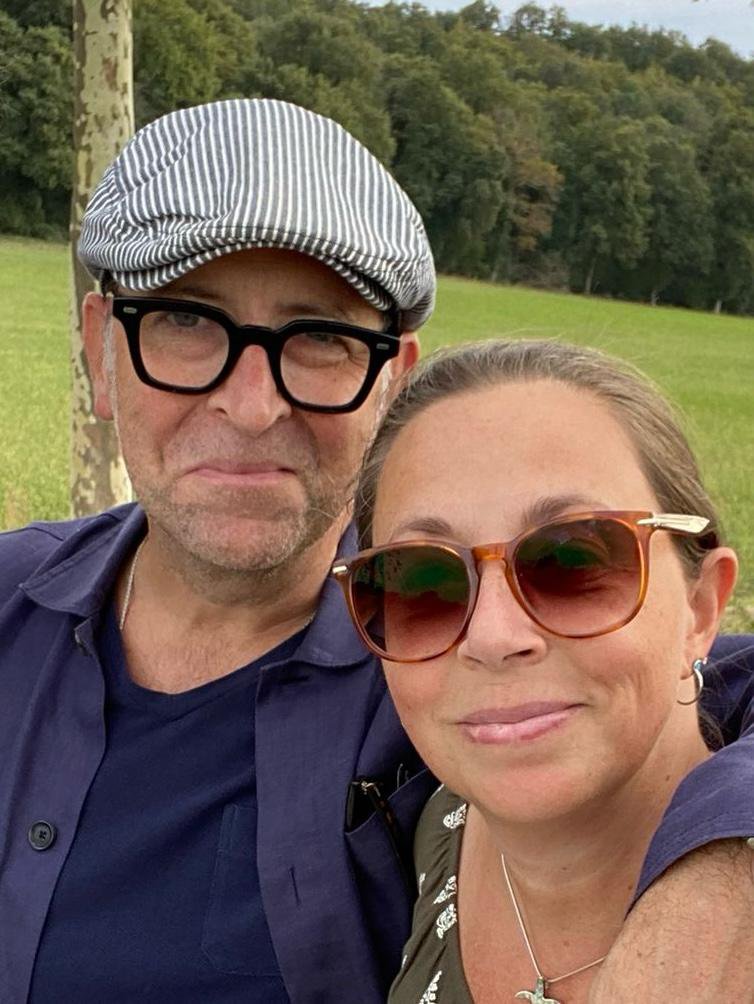
Karen, 54, and her husband, Jason, 55, from Buckinghamshire, decided to move to the bucolic surroundings of Macerata, the capital of Italy‘s central Marche region on the Adriatic, after reaching breaking point working as secondary school teachers back in Britain.
“After working in schools through the Covid pandemic, we were utterly burnt out and demoralised. We realised that we wanted to have a better quality of life,” Karen told The i Paper.
The couple, who did not want to share their surname for privacy reasons, had already bought a holiday home for £275,000 in Marche back in 2016.
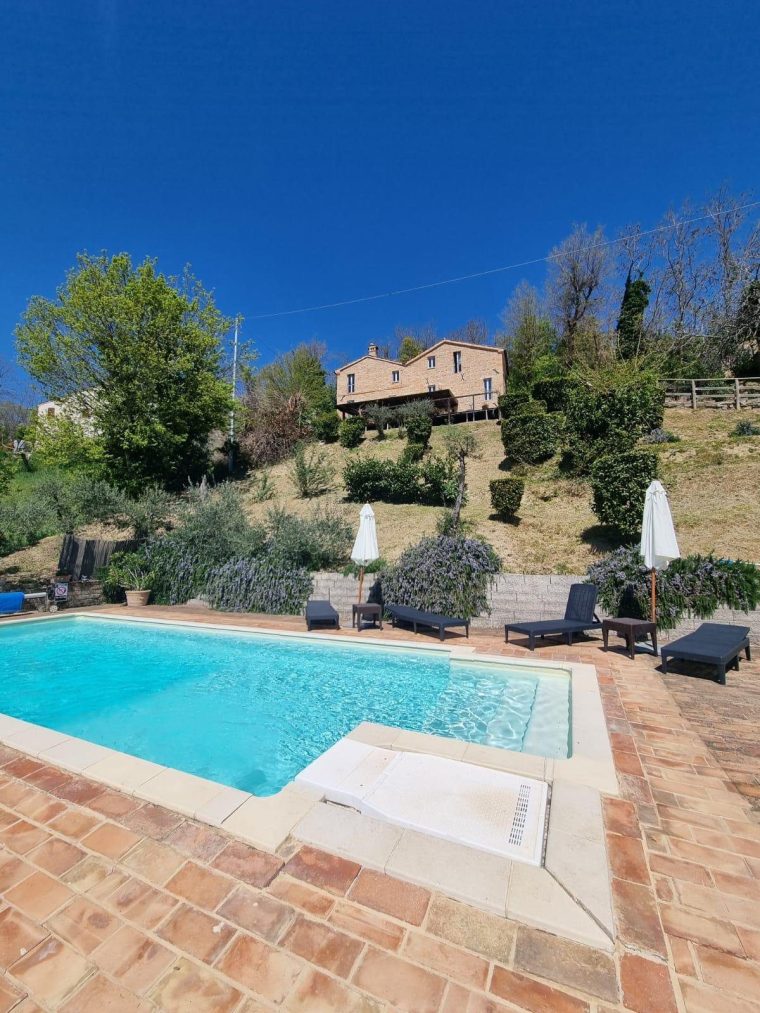
Its previous owners had renovated the 300-year-old, three bedroom farmhouse, and after buying it the couple altered it further to their tastes, including adding a pool.
“As we already had experience living in Italy during our holidays staying in Le Marche, we decided to move there permanently”, Karen said.
However, moving to the European Union had become more complicated since Brexit, and the couple now needed a visa.
They applied first of all for an Elective Residency Visa (ERV), which requires a minimum passive income deriving primarily from a pension. However, their application was unsuccessful because their passive income was insufficient.
A company helping expats to relocate, Smart Move Italy, suggested they apply for the Italian golden visa, or the Investor Visa, which aims to attract foreign investment into Italy.
Launched in 2017, the scheme is available to non-EU citizens who invest €250,000 (£215,856) in an Italian start-up; €500,000 (£431,712) in an Italian limited company; €2 million (£1.73m) in government bonds; or who make a philanthropic donation of €1 million (£863,425).
“We did not have enough money for three of the four options provided by the Italian government, so we began to consider investing €250,000 in an Italian start-up company,” Karen said.
The government provided a list of start-ups from which potential investors could choose, and the couple picked a “promising” biotech company that Smart Move Italy had already researched for another client.
The couple sold their three-bedroom home in Buckinghamshire, which generated enough money to pay off the remainder of the mortgage on their Italian farmhouse, and they put the rest towards the visa.
After selling their UK house, they had to move back and forth between short-term rented accommodation in the UK and their house in Italy – where they could stay for only 90 days in every 180-day period under post-Brexit rules. As a result, they also had to temporarily stop working.
The benefits of the investor visa, compared with the elective residency visa, was that the process was quicker, said Karen, and that applicants were permitted to work in Italy.
“Given our lack of housing in the UK (we had already used up the three months in Italy allowed under the new Brexit rules), speed was important, and if we spent all our savings on the investor visa, we would need to work,” she said.
Applying for the investor visa was a relatively smooth process, she said. They started gathering documents in March 2023 and had completed the whole process by the end of August.
There was a lot of time-consuming paperwork, she added. It was necessary to get permissions at the national, regional and local levels.
Read Next: ‘People don’t feel safe here’: The Brits living on Italy’s super-volcano
Because there were no other expats with the same visa living in the Macerata area, the local immigration office was not accustomed to the process, which caused “some roadblocks”.
However, after securing their visa, the couple made the move in 2023 and have now renewed their permits for a further three years. In future they will be able to apply to stay in Italy indefinitely.
Now, they both tutor privately online from home, surrounded by nature and silence. Jason teaches English at GCSE and A Level, while Karen teaches sociology.
The couple has also set up a small farm, and they now have a dog, three cats, chickens, and are planning to buy some goats and bees in the spring.
“We have no commute and get to look out on the beautiful Marche countryside while we work. We also have begun to create a smallholding on our land so we spend a lot of our spare time looking after the land and our various animals,” Karen added.
They say the only possible downside of their visa is the potential loss of a large sum of money if the company fails.
“Obviously we hope that won’t happen and that that we will be able to recover our investment, if not more. However, even if that is the case, we are trying to view it as the price we have pay for being able to live our best life.”


Post a Comment for "We secured Italy’s golden visas – now we live in a 300-year-old country farmhouse"