Tears Unfolded: An Israeli Book Club's Emotional Journey Amid War

Once upon a time, it was all quite entertaining. In came a lawyer, followed by another. Then an ophthalmologist joined them. There were also several English professors mixed with even more attorneys. Adding to this mix were some previous members of Knesset, a retired diplomat, a specialist in security matters, a counselor, and finally, one additional attorney.
Each month when we convened to dissect literature and indulge in gourmet meals, the collective contributions made within every alternate charming home provided enough support for the State of Israel to flourish once more, much like making the desert blossom anew. Our book club includes prominent philanthropists who aid our educational institutions to excel and our sportsmen to claim gold medals.
Our ranks consist of previous leaders from women’s groups, esteemed presidents of remarkable charities, a former education minister, a representative for human rights at the United Nations, and an advocate for coexisting with nature. We form a strong collective of involved, reflective, active companions who once resided in the luxurious settings of the English-speaking diaspora but opted instead to return to the warm shores of the Middle East.
And now we cry.
Back in those golden times, when Israel was a lively and dynamic democracy, our WhatsApp messages were filled with laughter about ageing physiques that bounce and sway. We planned boating trips and kayaking sessions on the Yarkon River.
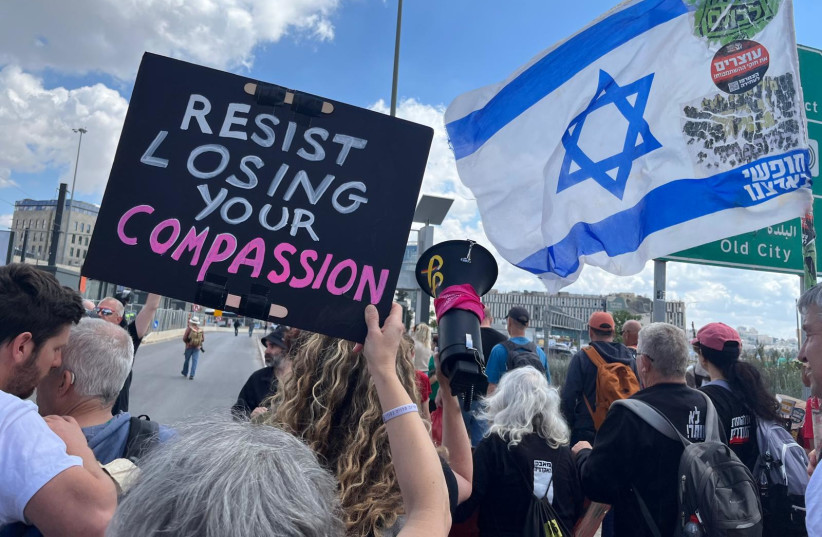
Now we drop our heads on laden tables as we pick at our food, venting about the horror. We trudge together to endless demonstrations; we run to shelters together when missiles rain on our parade. We do what we can: We help hostage families, write petitions. Some of us remain peace activists as we wonder how on God’s earth it all went so wrong.
And we cry.
WE STILL meet every month; we diligently read our books and discuss them, but the air in our lungs is different now. Who can dissect a tale of the cruel kidnapping of 250 Icelandic islanders in 1627 without agonizing about our own hostages , trapped within Hamas's tunnels since 2023? Numerous members of our group are children of Holocaust survivors; how do we study the schemes of World War II without feeling pain when thinking about the horrors of October 7?
How can we pontificate about religious lunacy in Ireland without the image of our own crazies raking in billions of additional handouts, while wildly protesting against the draft? All this, while we – the serving, working, tax-paying, army-going public – grapple in exhaustion with across-the-board cuts.
So, how do we examine these Kafkaesque tales of nauseating corruption within doomed alliances that plague their populations without having our blood pressure spike over the outrageous acts committed by those in power? objectionable, ghastly government ?
We don’t often discuss God, unless it’s about the violence happening in his name. However, pondering over religion occasionally brings me, even during a luscious dessert, to share recent insights from my daily Talmudic studies known as daf yomi.
Recently, the Talmudic tractate being dissected was "Sanhedrin" – an examination of judges, judgments, and those who face judgment. Parts of this discussion remain strikingly relevant today – can judges override a king, for goodness' sake? As expected, the response is both yes and no. It all hinges on who you consult.
The tractates currently under study across the Jewish world delve into themes of criminal acts and punishments, as well as suitable capital penalties for those who stray from the norms. Do you face burning, decapitation, strangulation, or stoning when engaging in intimate relations with your wife’s mother? Is the act considered "normal" or "deviant," and if committed with an animal, was it done knowingly or unknowingly?
I study this every day and am continuously blown away: The Talmud is the core of our culture and belief; dissecting its nuances sparks brain cells that sparkle; it’s a sacred and venerated text. And yet, it seems strange that our taxes fund people to ponder requisite punishments for upending society, while they don’t consider themselves part of our society. It feels desperately wrong.
Yet the coalition chucks billions to buy their support, while cutting salaries of teachers and doctors, including those who have served for hundreds of days in the military reserves.
What should we do? We just sit and shed tears.
Facing Despair Unresolved: Struggling with Hopelessness Due to War
ONCE IN A WHILE, shedding tears isn't enough. Just recently, during a bright spring day in Jerusalem, I went to what seemed like the most sorrowful spot on earth. At Mount Herzl Military Cemetery, rows upon unending rows of recent graves weigh heavy with grief; young individuals alongside their elders lie at rest. Ribbons of balloons dance above these markers, complemented by remnants of remembrance: beer bottles, football kits, and countless photographs — those poignant images! It’s such an overwhelming sadness that one cannot even cry adequately.
What actions can we take? We protest, practice yoga, sigh, and delve into reading books. We come together holding dog-eared editions of The Seal Woman’s Gift And ready ourselves to follow Olafur, Asta, and the captives in Algiers. Yet after turning just one page, we find ourselves dealing with our own hostages.
As sleepless Israel trembles between chills and sweltering heat; as we hold our children close and struggle to keep terrifying thoughts at bay; as we question whether we should sleep in our footwear out of concern we might have to flee to bomb shelters during the dead of night... isn’t this precisely when our unreliable government decides to bombard us once more with absurd regulations, unjust firings, and undemocratic nonsense? And all the while—perish the thought—they do not bother to investigate or remove anyone from their own ranks.
Ardent Zionists are questioning whether Israel was an unsuccessful experiment; can one individual truly bring everything crashing down for us all?
It's becoming tougher to recover from setbacks.
Next month, we’ll take deep breaths and discuss Apeirogon A candid look at how an Arab and a Jew collectively cope with loss amidst their nation's unending strife. We have seen how a recent somber ritual honoring the deceased concluded in the tranquil suburban municipality of Ra'anana, blending both Jewish and Palestinian traditions.
In our book club, we don’t attack one another. We discuss, deconstruct, and dream of better times ahead, when reading books is just a simple pleasure.
See you at the demonstration.
The author teaches at Reichman University. peledpam@gmail.com


Post a Comment for "Tears Unfolded: An Israeli Book Club's Emotional Journey Amid War"