Supreme Court Decides: Public Has Right to Wild Camp on Dartmoor
A wealthy hedge fund executive and his spouse have lost their Supreme Court struggle to prohibit individuals from engaging in spontaneous camping on Dartmoor.
The five judges collectively rejected the lawsuit filed by affluent property owners Alexander and Diana Darwall, who argued that certain campers had caused disturbances for their animals and harmed the surrounding ecosystem.
Mr and Mrs Darwall - a ceramics expert who used to work at the Sotheby auction house - keep cattle on Stall Moor, which forms part of their more than 3,450-acre Blachford estate in the southern part of the national park.
The landowners contested a decision made by the Court of Appeal at Britain’s supreme judicial body, arguing that the legislation permits individuals to camp on Dartmoor Commons as long as they adhere to local regulations.
The case revolved around interpreting the Dartmoor Commons Act 1985, which states that 'the public should be allowed access to the commons on foot or on horseback for outdoor recreational activities.'
Last October, their attorneys informed the Supreme Court that the statute permits public access solely on foot and horseback, which inherently implies walking and riding.
The Dartmoor National Park Authority (DNPA) dismissed the challenge, with their legal representatives deeming the assertion that pitching a tent might harm terrain and plants as 'preposterous'.
In their ruling, Lords Sales and Stephens stated that the legislation wouldn’t be logical if the public’s right to recreate were restricted as suggested by the Darwalls, emphasizing that the idea of ‘outdoor recreation’ should be interpreted broadly.
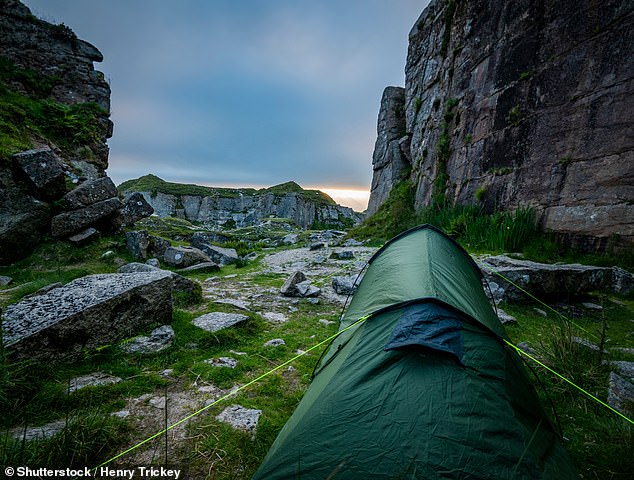
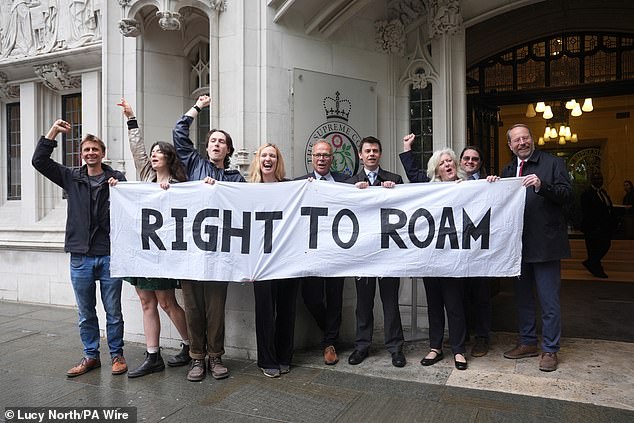
In a decision supported by Lord Reed, Lady Rose, and Lady Simler, they stated: "The term 'recreation' is employed here without specifying the particular form it must assume."
'It does not solely encompass activities like walking or riding for leisure.'
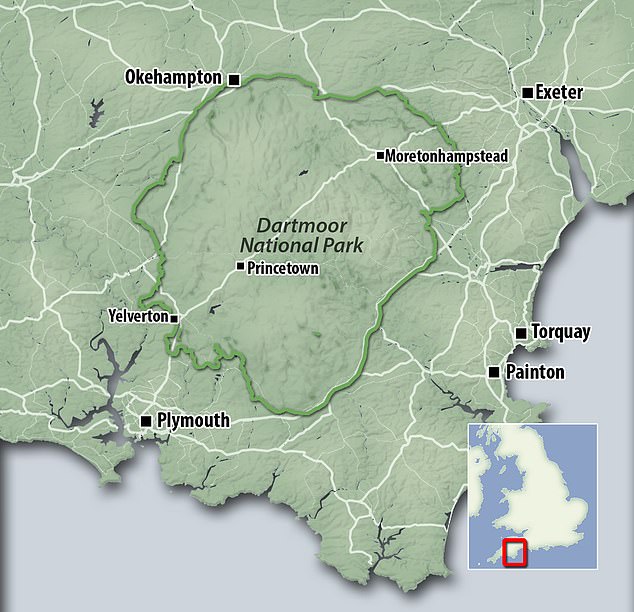
Dartmoor National Park, established in 1951, spans across 368 square miles and includes 'commons,' which are open stretches of privately owned moors allowing local residents to graze their animals.
In January 2023, High Court Judge Sir Julian Flaux determined that the 1985 legislation did not permit individuals to set up tents for an entire night on the Dartmoor common lands without obtaining consent from the landowners.
However, activists contended that the choice 'went too far' and represented a 'significant regression,' which might impact birdwatching, fishing, and various other pursuits.
In July of that same year, the Court of Appeal reversed the earlier decision following a challenge from the DNPA. The panel consisting of three high-ranking judges concluded that the legislation grants individuals the entitlement to rest or sleep at Dartmoor commons during both daytime and nighttime, irrespective of whether they use tents or not.
Sir Geoffrey Vos stated in his ruling that the 'key issue' revolved around whether wild camping could be classified as a type of 'outdoor recreation'. He concluded that it indeed qualified as such.
In their written submissions to the Supreme Court during the previous year’s hearing, Timothy Morshead KC, representing the Darwalls, stated that the couple ‘are not driven by an intention to prevent camping on Dartmoor.’

But he said: 'Concerns arise from their responsibilities as stewards of the land in their ownership and over which they have commoners' rights: concerns about the damage that wild camping can cause and, in particular, about the significant risk of fire associated with it.'
However, the lawyers representing the DNPA argued that the term "on foot" implies that accessing the commons should be done on foot rather than by vehicle.
In his written statements, Richard Honey KC remarked: "To claim that simply putting up a tent for backpack or wilderness camping harms the land and plants is preposterous."
In their judgment, Lords Sales and Stephens stated that the phrase 'open-air recreation' ought to be interpreted broadly. They argued that construing it narrowly could result in 'an unreasonable and impractical restriction on the park authority’s ability to restore damages sustained on the commons.'
They went on to say: "Although there are limitations placed on the landowners' property rights, the DNPA gains the authority to prevent and address troublesome camping through its capability to create and implement bylaws as well as issue notifications."
'Accordingly, the legislation puts in place the means for public regulation of use of the commons which is in practice likely to be more effective in protecting the land than attempts by private persons to challenge such use through themselves having to confront people on their land and then bring a claim in private law.'
Following their defeat at the Supreme Court Mr and Mrs Darwall said: 'We are disappointed by the Supreme Court's judgment.
'Our aim from the outset was to protect and preserve Dartmoor, its flora and fauna.
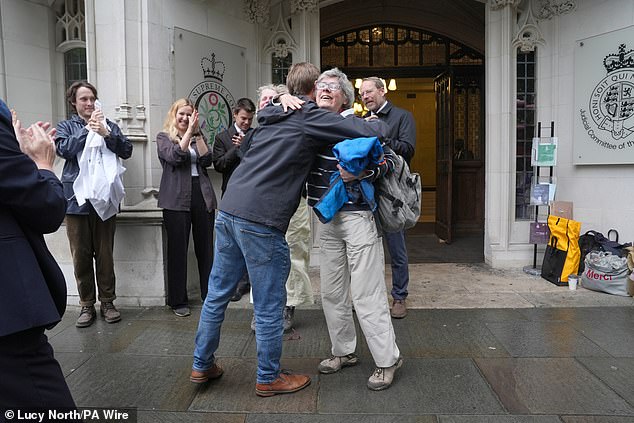
'Landed proprietors and cultivators have consistently held an essential role in the preservation of Dartmoor.'
'Removing the significance of landowners and farmers will not enhance the vibrancy of the Dartmoor Commons.'
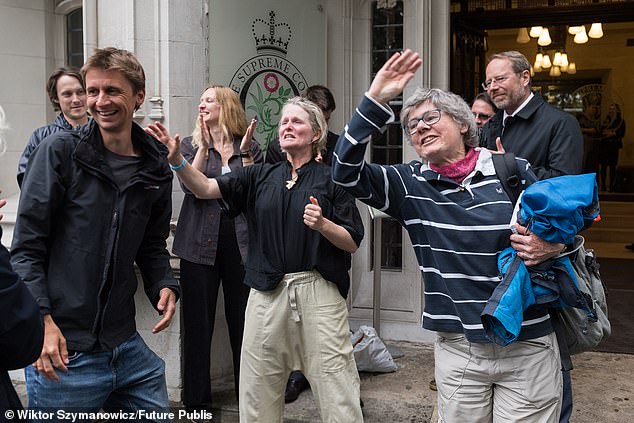
Caroline Voaden, the Liberal Democrat MP for South Devon, expressed her delight at the Supreme Court’s decision allowing people to wild camp on Dartmoor, stating: "I’m thoroughly pleased with this outcome."
This serves as confirmation of what we have always understood: the stars belong to everybody, and having access to nature isn’t just an extra; it’s an essential requirement for leading a joyful and wholesome life.
'Free camping benefits both the mind and spirit – I’m delighted the judges recognized this.'
It’s regrettable that this issue has to be examined once more in the courthouse.
'I hope now that this is settled, we can start working on expanding our right to wild camp beyond just Dartmoor.'
'On the contrary, Labour discussed broadening the permission to freely camp throughout the UK. I trust they will turn these statements into deeds and enhance access privileges for hikers and campers nationwide.'
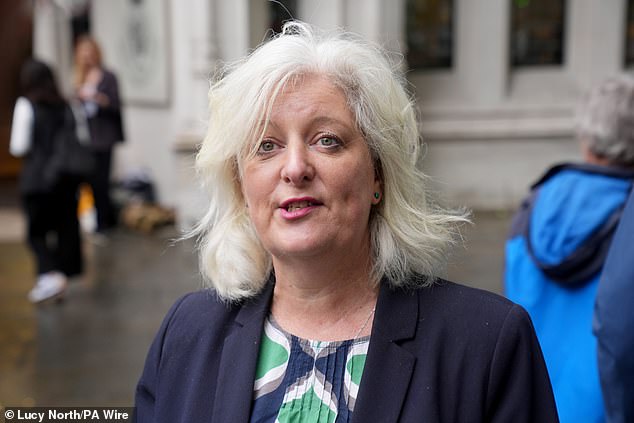
Reacting to the Supreme Court ruling on Dartmoor, Dr Kevin Bishop, chief executive of Dartmoor National Park Authority, said: 'We are delighted and relieved with the Supreme Court's ruling. This is a landmark judgment not just for Dartmoor National Park but for people who have long campaigned for access rights.
We are deeply thankful to the Open Spaces Society, which supported us in our legal efforts, and to the Dartmoor Preservation Association for initiating a fundraising campaign to cover our legal expenses.
We express our gratitude to them and their numerous supporters who have stood alongside us. Additionally, we extend our thanks to our legal team comprising Richard Honey KC and Vivienne Sedgley.
The ruling reinforces our longstanding conviction regarding the public’s entitlement to backcountry camping on specific common areas and, significantly, highlights our responsibility in overseeing and controlling this access.
It should be noted that having this permission does not grant an unrestricted right to camp anywhere or do as you please. Along with these rights come responsibilities—to ensure minimal impact and to depart without leaving any traces behind.
Dr Kevin Bishop, chief executive of Dartmoor National Park Authority, went on to say: "We have strongly defended the right to backpack camp, and we will similarly ensure that individuals use this privilege responsibly and with consideration for both landowners and farmers."
'When considering backpack camping on Dartmoor, make sure to adhere to the guidelines provided on our website.'
'It is now the moment to look ahead and collaborate for the betterment of Dartmoor.'
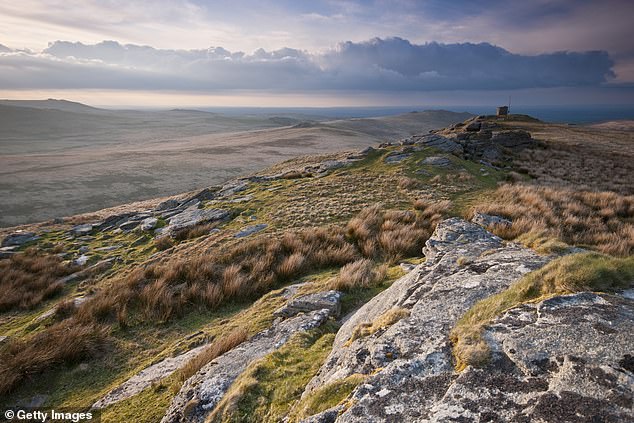
We will keep collaborating with ordinary people, every landowner, community members, and our partners to safeguard Dartmoor’s nature, charm, and heritage while guaranteeing equitable access for everyone and showing respect for the natural surroundings.
While in opposition, the Labour party openly supported our efforts to safeguard the right to backpack camp.
'Now they are in government, we hope that they will work with us to ensure that we have the tools and resources to manage responsible access and to look at lessons that can be learnt from the Dartmoor case before they publish the forthcoming Green Paper on access to nature and the countryside.'
Guy Shrubsole, the co-founder of the campaign group Right to Roam, said he was 'delighted', 'elated', and 'relieved' with the Supreme Court ruling .
Mr Shrubsole – who initially explored the national park in Devon during his teenage years – mentioned, "This case has brought into sharp focus just how peculiar and uncommon it is that Dartmoor remains the sole location in England and Wales with a legally sanctioned right for wild camping."
In Scotland, just across the border, people have nearly unrestricted access to wild camping, which is why we're urging the government to recognize the significant public interest generated by this issue. We want them to acknowledge the widespread backing for allowing wild camping and consider expanding legislation accordingly.
We aim for them to amend the law immediately, enabling folks in England to relish the freedom of wild camping and explore vast expanses of our picturesque landscapes.
Kate Ashbrook, the general secretary of the Open Spaces Society, stated following the ruling that the government must take action to guarantee everyone has the right to camp overnight in all national parks and wilderness areas.
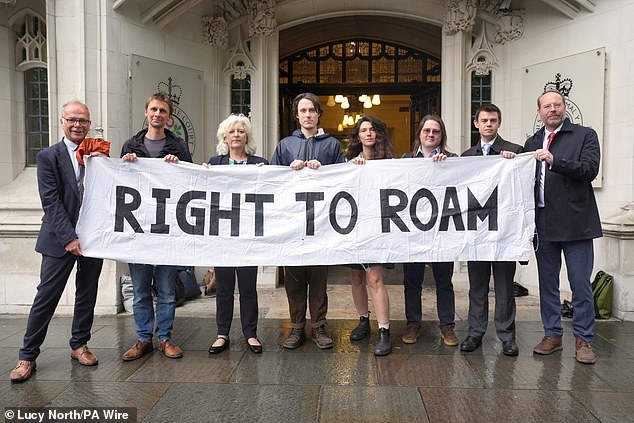
She stated, "This is an incredible result, validating our long-held belief that the public has consistently had the right to camp across almost all 359 square kilometers of Dartmoor's common land."
We were consequently thrilled to offer our support to the Dartmoor National Park Authority and extend our deepest gratitude to our counsel from Frances Taylor Building Chambers for their voluntary work, as well as to our solicitor Richard Buxton.
We sifted through the laws from the 19th century concerning public spaces and accessibility, finding that many explicitly barred camping as part of those rights of access.
'Consequently, camping had to be included under the general category of outdoor activities; else, there wouldn’t have been any need to specifically omit it. The judges concurred.'
Read more

Post a Comment for "Supreme Court Decides: Public Has Right to Wild Camp on Dartmoor"