Kelantanese Serunai: Carving Sound in Three Days, Preserving Tradition for a Lifetime
For Mohd Izani Mohd Noor, a devoted flute craftsman from Kelantan who is 41 years old, the serunai (traditional oboe) is more than just an instrument; it serves as the voice of heritage and a cultural essence that needs preservation before it disappears.
Despite the intricate and time-consuming process of crafting the Kelantanese serunai, which can take up to three days, his commitment remains steadfast.
Every block of wood sculpted and each hole bored is carried out with patience and intent, all aimed at maintaining serunai crafting as an enduring artistic practice.
"I developed an interest during my school days. I frequently went to see my mentor, the late Tok Wan Nasir, to learn how to play the serunai. It was through these visits that I started grasping the process of crafting one," Izani recalled, reminiscing about his formative years in Kampung Pulau Hilir, Kubang Kerian.
In 2013, he began crafting his serunai, initially as a pastime. What started as a hobby has now evolved into a specialised craft, with Mohd Izani now creating serunai for customers across Malaysia.
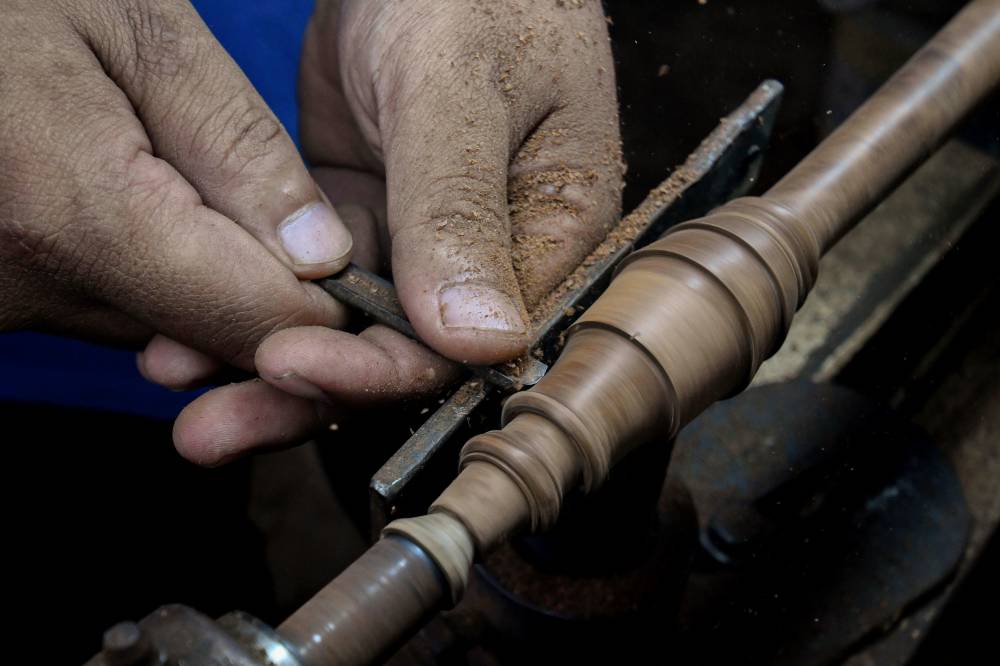
He mentioned that the creation process starts by choosing the appropriate wood, like merbau, sira tanduk, rengas, or leban based on what customers prefer. Afterward, the selected wood is sized down, turned on a lathe, and refined for smoothness.
There are seven holes bored into the top part of the instrument, along with an additional hole underneath. All these contribute to producing the unique sounds characteristic of this musical tool.
"The lower section is made from softer wood to produce a mellow, melodious sound. The upper part holds the pipit (mouthpiece), made of brass and fitted with daun tar (palm-like leaves) for blowing,” Izani explained.
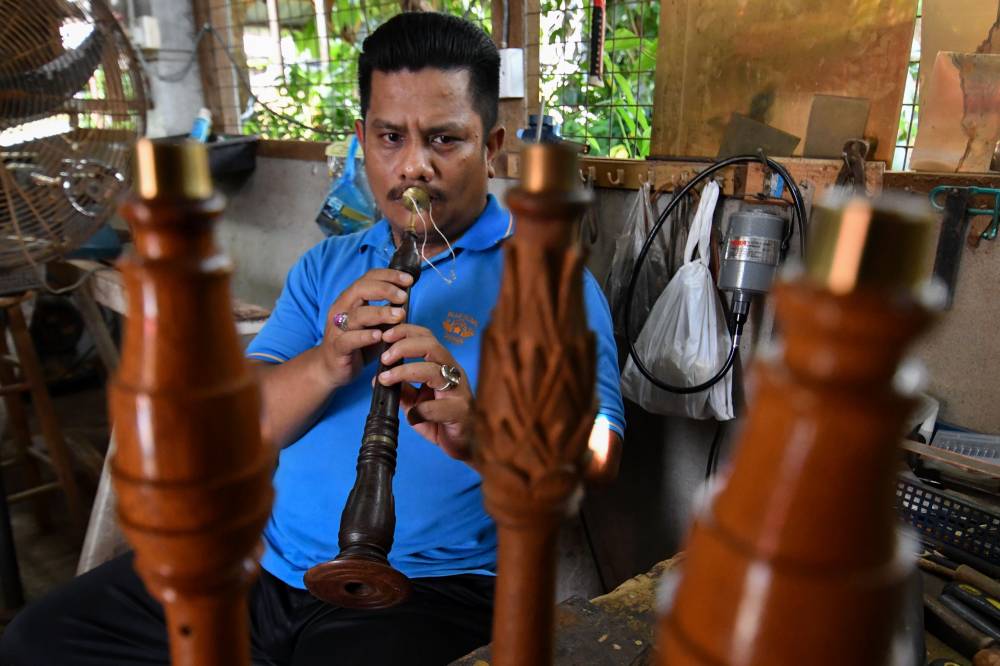
He mentioned that creating the pipit demands exceptional accuracy because a minor flaw could impact the sound quality. Additionally, choosing the daun tar is significant since solely smooth, premium-grade leaves are utilized.
"The leaves are simmered together with coconut milk and pulp for roughly one hour, followed by a full day of drying. This procedure renders the leaves somewhat greasy, which stops saliva from adhering to the pipit and guarantees its longevity for as long as three months," he explained.
Izani crafts two kinds of serunais: the longer serunai ibu which measures 19-21 inches, and the shorter serunai anak, spanning 13-15 inches. Each instrument includes seven fingerholes and one basehole, capable of generating distinct pitches based on how they're played.
"He mentioned that the mother serunai generates a more rugged sound, typically utilized in performances including Silat, Wayang Kulit, and Main Puteri. It is frequently featured in traditional music compositions such as Tabuh, Hulubalang, and Serama Berjalan," he clarified.
Meanwhile, the serunai anak offers a sharper, more delicate tone suited to Makyong's soulful performances. This shorter serunai is typically used for songs like Berkabar Belas, Pakyong Muda and Sedayung Makyong.
Each serunai takes around three days to complete, including the tuning process. Prices range from RM280 to RM700, depending on the type of wood and complexity of the carvings.
"As long as people still want to hear the sound of the serunai, I will keep making them. This is my way of preserving our heritage, one breath at a time,” he said, resolute in his commitment to this cultural craft. - BERNAMA


Post a Comment for "Kelantanese Serunai: Carving Sound in Three Days, Preserving Tradition for a Lifetime"