Britons Feel Like 'Strangers in Their Own Country,' Survey Reveals
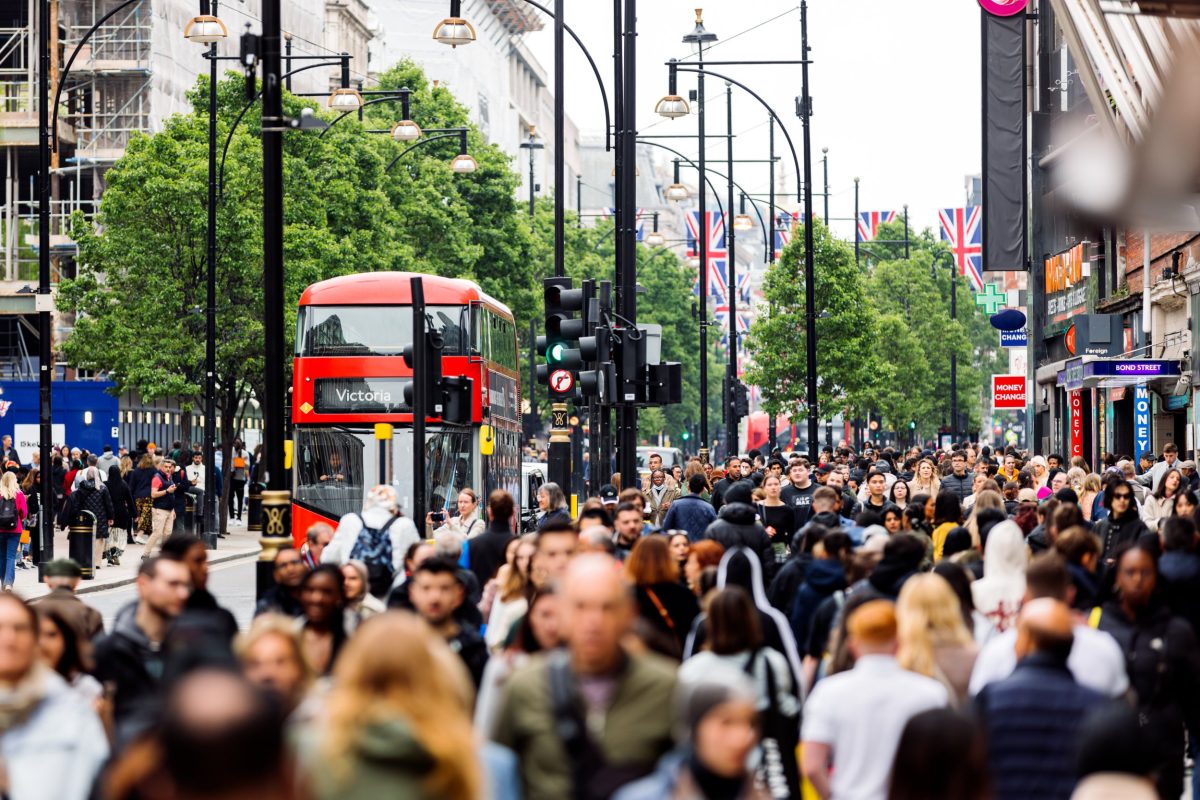
One of the biggest studies conducted in the UK about social integration reveals that half of British people express feelings of disconnection from the community surrounding them. More than 40 percent mention experiencing moments where they feel like "outsiders in their homeland."
A poll of over 13,000 people by More in Common, in partnership with Citizens UK and UCL Policy Lab, revealed many Britons reported feeling unease about the state of community and belonging across Britain.
In the key discoveries, half of the respondents expressed feelings of disconnection from society. More than four in ten mentioned experiencing occasional alienation within their homeland—a feeling that escalates to almost five in ten amongst Asian Britons.
The findings follow Sir Keir Starmer facing criticism for stating in a speech the previous week that the The UK was at risk of turning into an "isolated nation of outsiders" because of substantial immigration. .
Starmer made the comments alongside the release of the much-anticipated immigration white paper , where the government outlined plans to stop issuing care worker visas and proposed stricter measures for industries significantly dependent on foreign labor.
Nevertheless, the researchers involved in conducting the survey maintain that worries regarding insufficient social cohesion extend far beyond just immigration issues.
Luke Tryl, Director of More in Common UK, stated that "public feedback highlights various elements pushing people apart."
"Some attribute this shift to the move towards digital screens instead of physical offices; others discuss the disappearance of communal areas and traditions that used to unite us. To numerous individuals, it feels as though the cost-of-living crisis has turned having a social life into something extravagant," he explained.
Nearly sixty-two percent of participants indicated that they think Britain is growing increasingly polarized. Additionally, fifty-four percent felt that the nation has become more skeptical and less trustful compared to what it was five years prior. About forty-one percent characterized themselves as "distrusting" towards most individuals.
The research additionally underscores an increasing gap between generations. Only 29 percent of individuals aged 18 to 24 reported believing that most people can be trusted, as opposed to 48 percent among those over 65 years old. Furthermore, younger adults showed a higher tendency towards feeling socially isolated and expressed greater skepticism regarding the nation's trajectory.
People with lower incomes were much more prone to express feelings of being disconnected and distrusting. Specifically, out of those making under £20,000 annually, 56% reported feeling isolated from society, whereas this sentiment was shared by only 42% among individuals earning above £60,000.
Education level also affected people's reactions, as individuals who did not attend university were more prone to feeling estranged and less inclined to be hopeful regarding Britain’s upcoming prospects. Among all groups surveyed, graduates stood out as the sole cohort where positivity surpassed negativity.
Marc Stears, Director of UCL Policy Lab, stated: "Too frequently, individuals experience disconnection and isolation from their peers. Although the reasons behind this are multifaceted—ranging from economic stressors to digital behaviors and shifts following COVID—the takeaway is evident: there needs to be an increase in venues for interaction along with greater chances to foster mutual understanding."
The report delves into the political ramifications as well. Many individuals who reported feeling alienated mentioned they have lost trust in traditional political entities, with 46 percent concurring that "the political system favors the wealthy and influential."
Citizens UK, an organisation collaborating with various community groups nationwide, cautioned that without intervention, distrust and fragmentation might intensify. "Last summer illustrated the potential consequences when frustration and suspicion reach their peak," stated Matthew Bolton, its executive director, echoing concerns about the series of disturbances following the deaths of three young girls in Southport.
The solutions to this aren't found in Whitehall. By heeding the voices of those nearest to the ground, we can develop a framework for unity grounded in local leadership and community empowerment.
The findings are being released to coincide with the launch of " This Place Matters” , an initiative spanning one year focused on reconstructing social connections and enhancing community trust within neighborhoods.


Post a Comment for "Britons Feel Like 'Strangers in Their Own Country,' Survey Reveals"